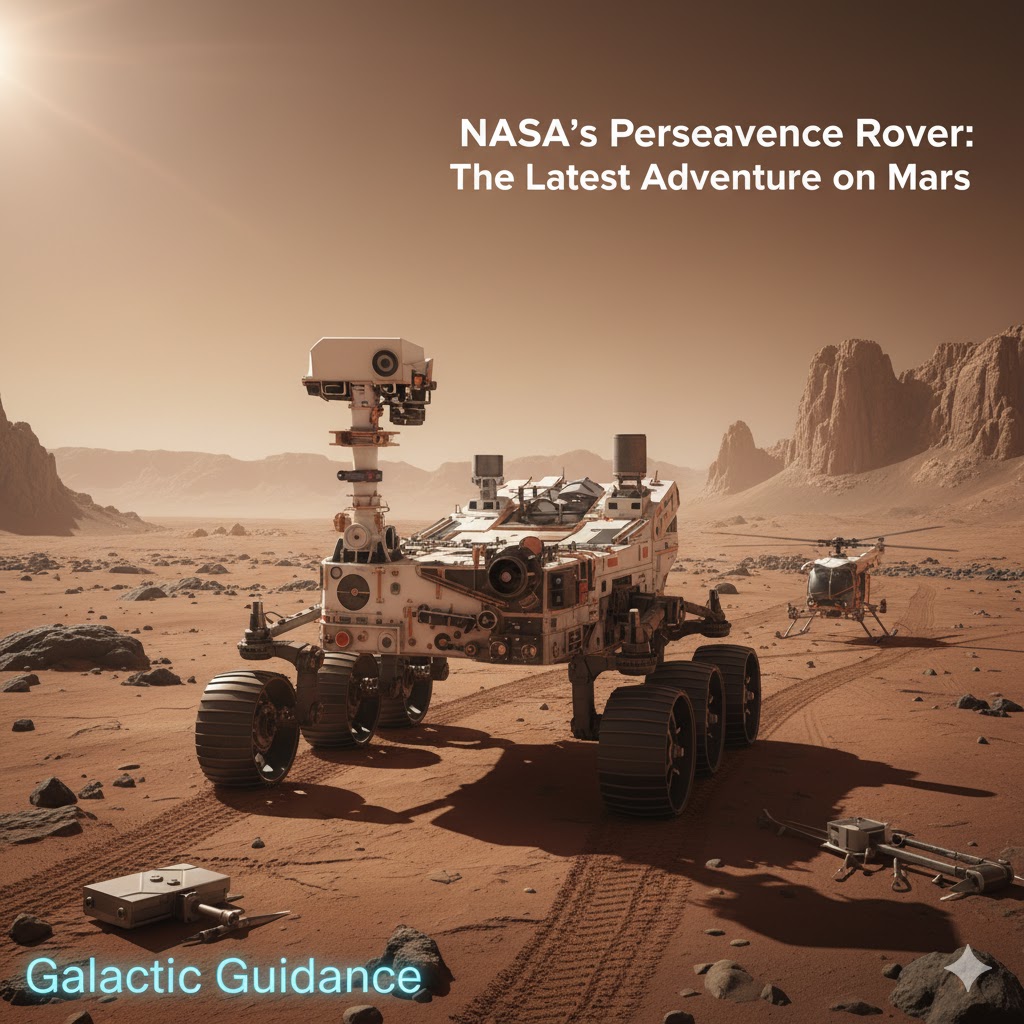
NASA’s Perseverance Rover: The Latest Adventure on Mars
Space exploration has always been a fascinating frontier, and one of the most exciting missions in recent years has been NASA’s Perseverance Rover mission to Mars. Launched in 2020, Perseverance has been roving the Martian surface since February 18, 2021, exploring the planet’s geology, searching for signs of past life, and even testing new technology that could help humanity return to Mars one day.
But what exactly is Perseverance doing on Mars, and why does it matter? Let’s dive into this exciting mission and explore the key discoveries and innovations that have made it one of the most important space missions of the decade.
What is the Perseverance Rover?
The Perseverance Rover is NASA’s latest robot exploring the surface of Mars. It’s part of NASA’s Mars 2020 mission, designed to further our understanding of the Red Planet, and it’s equipped with state-of-the-art tools and instruments to analyze the Martian environment in unprecedented detail.
Perseverance is about the size of a car, weighing around 1,025 kilograms (2,260 pounds), and it’s packed with high-tech gear, including a suite of cameras, scientific instruments, and a drill to collect samples of Martian rock and soil. One of its main tasks is to look for signs of ancient microbial life, which could help us understand whether life ever existed on Mars.
This rover is also tasked with helping prepare for future human exploration of Mars. It’s testing new technologies that could one day be used in human missions, such as the MOXIE instrument, which is designed to produce oxygen from the Martian atmosphere, an essential resource for astronauts.
Mission Goals: Searching for Signs of Life
One of the primary goals of the Perseverance mission is to search for ancient signs of life on Mars. Mars is believed to have once had a much warmer, wetter climate, with rivers and lakes that could have supported microbial life. Perseverance’s task is to explore an ancient river delta in the Jezero Crater, where it’s likely that microbial life could have existed billions of years ago.
The rover is equipped with tools like the SuperCam, which uses a laser to analyze the composition of rocks from a distance, and the PIXL (Planetary Instrument for X-ray Lithochemistry), which helps determine the mineral composition of Martian rocks at a microscopic level. By studying the surface of Mars in this way, Perseverance is helping scientists understand if the conditions that could support life existed on the planet in the past.
Collecting Samples for Future Missions
One of the most groundbreaking aspects of the Perseverance mission is its role in collecting samples from Mars. For the first time, a rover is collecting Martian soil and rock samples, which will eventually be returned to Earth for analysis in a future mission. These samples are stored in small, sealed tubes aboard the rover, ready for pick-up by a future Mars mission.
NASA is collaborating with the European Space Agency (ESA) for the sample return mission. Once these samples are retrieved from Mars, they will be studied in laboratories here on Earth, where scientists hope to learn more about the planet’s history and whether life ever existed there.
Ingenuity: The First Powered Flight on Mars
One of the most exciting additions to Perseverance’s mission is the Ingenuity helicopter, which made history as the first powered flight on another planet. Ingenuity was carried to Mars attached to Perseverance’s belly, and after landing, it took off in the thin Martian atmosphere for a series of test flights.
Ingenuity’s main goal was to demonstrate the feasibility of flight in Mars’ atmosphere, which is only about 1% as dense as Earth’s. But the helicopter has exceeded expectations, successfully completing several flights and providing valuable data on flight dynamics in the Martian atmosphere. The success of Ingenuity paves the way for future aerial exploration on Mars, which could greatly expand our ability to explore the planet in the coming years.
Key Discoveries and Highlights of Perseverance’s Mission
Since landing on Mars, Perseverance has made a series of important discoveries and achievements that are pushing the boundaries of space exploration. Here are some highlights:
-
Rocks and Mud from the Past: Perseverance has successfully collected its first rock samples from the Martian surface, opening up a treasure trove of data that will one day help scientists understand the history of Mars.
-
Martian Weather: The rover has been taking weather readings on Mars, helping scientists understand how the planet’s atmosphere works and providing insights into its climate and the potential for future human habitation.
-
Record-Breaking Flight: Ingenuity has set multiple records for powered flight on Mars, proving that aerial exploration is not only possible, but incredibly useful for surveying the Martian surface.
-
First Sound Recordings from Mars: Perseverance has also captured the first sounds of Mars, including the sound of its wheels crunching on the Martian soil. These recordings provide a unique audio perspective of the planet’s environment.
-
Tracking Mars’ Changing Seasons: Perseverance is also studying how the seasons change on Mars, which could have important implications for understanding its climate history and preparing for future missions.
Why Perseverance Matters: Looking Toward the Future
The Perseverance Rover isn’t just about exploring Mars; it’s about paving the way for future human exploration. As we continue to push the boundaries of space exploration, Perseverance is helping us understand how we can survive and thrive on Mars. The data collected by Perseverance will be crucial in determining how we can utilize Mars’ resources, grow food, produce oxygen, and protect astronauts from radiation.
In the longer term, Perseverance’s findings could also help answer one of the most profound questions of all: Are we alone in the universe? By exploring Mars’ ancient environments and searching for signs of life, this mission brings us one step closer to understanding whether life ever existed beyond Earth—and what that might mean for humanity’s place in the cosmos.
Conclusion: Perseverance’s Legacy and Future Missions
As we look to the future, Perseverance will continue to serve as a cornerstone of our exploration of Mars and beyond. Whether it’s studying the planet’s geology, collecting samples for future return to Earth, or testing new technologies for human missions, Perseverance is pushing the boundaries of what’s possible in space exploration.
Stay tuned to GalacticGuidance.wiki for all the latest updates on space missions, discoveries, and technologies that are shaping the future of human exploration. The universe is full of wonders waiting to be explored, and with Perseverance leading the way, we’re closer than ever to unraveling the mysteries of Mars and beyond.